
Title: South Korea’s Financial System Looks Stable — But Rising Leverage Is Turning Heads
Keywords: South Korea, Bank of Korea, financial stability, household debt, housing market, stock market, leverage, Korean won, foreign outflows, interest rates, inflation
South Korea’s Financial System Looks Stable — But Rising Leverage Is Turning Heads
Introduction
At first glance, South Korea’s financial system seems to be holding up pretty well. The economy is still growing, banks remain resilient, and the country’s external repayment ability is solid. That’s the general message from the Bank of Korea’s latest financial stability report.
But dig a little deeper, and the picture becomes less comfortable. A combination of rising home prices, a stronger appetite for stock market bets, and increasing use of borrowed money is starting to create pressure points in the system. In other words, things may look calm, but the undercurrents are getting stronger.
That’s exactly why the central bank is paying close attention. Stability today does not necessarily mean safety tomorrow, especially when asset prices are moving fast and investors are leaning more heavily on leverage.
A System That Is Stable — For Now
The Bank of Korea stressed that South Korea’s overall financial system remains stable, even with domestic and global uncertainties still hanging around. That confidence is not coming out of nowhere.
First, the real economy continues to grow. It may not be booming, but it is steady enough to support the financial system. Second, financial institutions have shown decent resilience, which means they are better equipped to absorb shocks than in weaker periods. Third, South Korea’s external solvency remains a strength, giving the country some room to breathe even when foreign markets get choppy.
That said, the central bank was careful with its wording. It also noted that recent volatility in domestic financial and foreign exchange markets has increased noticeably, and that potential risks remain a source of instability. So while the system is stable, it is not exactly relaxing on a beach either.
Housing Prices and Leverage: A Familiar and Uncomfortable Mix
One of the biggest concerns is the renewed rise in housing prices, especially in Seoul and nearby areas. Anyone who has watched South Korea’s property market knows this is not just a real estate story — it is a financial stability story.
When home prices accelerate, households often borrow more to get in before prices climb further. That can increase financial leverage across the economy. And once leverage rises, the system becomes more sensitive. A small price correction can suddenly look much bigger if lots of people are borrowing to buy the same kind of assets.
The Bank of Korea warned that if home prices surge again, financial imbalances could deepen further. That is a polite way of saying the market may be heating up in a way that could be hard to cool down later.
The first quarter household loan data shows that total household lending rose 3.5% year on year to 1,993.1 trillion won, or about $1.3 trillion. That increase is not explosive, so at first glance it does not look alarming. But the monthly pace has picked up recently, mainly because of the rise in Seoul home prices.
That is the problem with financial risk: it rarely shows up all at once. It tends to build quietly, then suddenly becomes obvious.
Stock Market Optimism Is Also Adding Fuel
It is not just housing. South Korea’s stock market has also played a role in encouraging more borrowing and speculation.
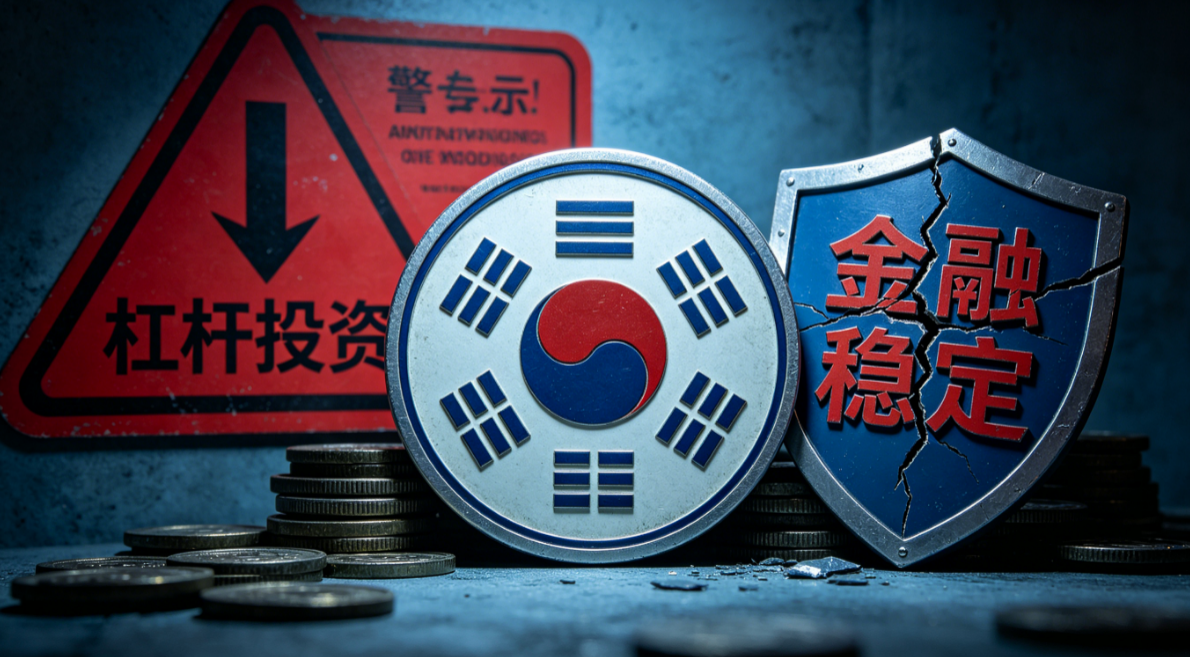
The central bank warned that more people are engaging in leveraged stock trading during the recent market rally. That means investors are using borrowed money to chase gains. If prices keep rising, the strategy looks brilliant. If prices reverse, the losses can snowball fast.
This is why leveraged trading often makes markets more volatile. It can amplify the ups, but it also magnifies the downs. When the mood shifts, people who borrowed to invest may rush to cut positions, which can accelerate a selloff and make the market swing even harder.
The Bank of Korea also noted that non-mortgage household lending accelerated in the fourth quarter of last year and the first quarter of this year. That has led many observers to believe a large amount of borrowing may have flowed into the stock market.
If that is the case, the rally may not be as healthy as it looks. A market supported by broad confidence is one thing; a market powered by leverage is another.
The Won, Foreign Outflows, and Market Volatility
South Korea’s financial stress is not just coming from inside the country. External market conditions have also been rough.
According to the report, the won weakened significantly and foreign investors pulled money out of Korean assets, making market volatility worse in the first half of the year.
The exchange rate moved sharply, with the won against the U.S. dollar falling from around 1,400 won in the first quarter to around 1,500 won in recent months. That kind of move matters a lot. A weaker won can raise import costs, affect investor sentiment, and add to inflation pressure.
At the same time, foreign investors were net sellers of Korean assets, with outflows reaching $83.37 billion as of June 9. That is a big number, and it reflects how fragile sentiment can become when global risk appetite changes.
When foreign money leaves and the currency weakens, financial markets tend to feel more exposed. Even if the domestic economy is still functioning normally, the market mood can turn nervous very quickly.
Weak Sectors May Feel the Pressure First
Another issue the Bank of Korea highlighted is the risk of loan distress spreading in vulnerable industries. This is important because financial instability often starts in the parts of the economy that are already weakest.
The report said credit risk remains elevated for weak household borrowers and firms in certain sectors. That means if lending conditions tighten, or if asset prices soften, these groups could feel the stress first.
This is one reason central banks dislike letting imbalances build too long. The impact does not stay neatly contained. Once pressure starts hitting fragile borrowers, it can spread through the banking system, the labor market, and eventually household spending.
So even if the overall numbers still look manageable, the quality of credit matters just as much as the quantity.
Why the Central Bank Is Sounding More Cautious
The Bank of Korea seems to believe that higher interest rates may help cool some of these risks. As market rates rise, expectations for further asset price gains and overall risk appetite are likely to weaken. That could help reduce the buildup of financial imbalances.
In simple terms, more expensive money usually makes people think twice before borrowing to buy property or speculate in stocks. That does not solve every problem, but it can slow down the pace of excess.
Still, the central bank also warned that in the short term, market volatility and default risk in vulnerable sectors could rise. So even if tighter monetary conditions help in the longer run, the transition may not be smooth.
That is the tricky part for policymakers. If they move too slowly, imbalances continue to grow. If they move too quickly, financial stress may rise before the system adjusts.
Inflation Adds Another Layer of Pressure
To make things even more interesting, inflation is still a major concern. Because price pressures remain elevated and the economy is holding up reasonably well, the Bank of Korea has been signaling the possibility of another rate hike.
In May, it kept its benchmark interest rate unchanged for the eighth straight meeting, but the language around future policy has become more hawkish. Governor Rhee Chang-yong recently said the central bank would take “active measures to suppress inflation” until it is convinced that inflation is moving steadily toward its target.
That matters because inflation and financial stability often pull policy in different directions. A central bank may want to raise rates to fight inflation, but that same move can also increase debt burden and strain asset markets. South Korea is now navigating exactly that balancing act.
Conclusion
South Korea’s financial system is stable, but that stability is being tested by familiar risks: rising house prices, more leveraged stock trading, a weaker won, and ongoing foreign capital outflows.
The Bank of Korea is right to be cautious. Financial systems usually do not crack because of one dramatic event alone. More often, they weaken gradually as borrowing increases, asset prices rise, and investors become too comfortable with risk.
For now, the system is still standing on solid ground. But the ground is getting a little softer. If housing prices keep climbing, leverage keeps rising, and volatility stays elevated, the next challenge for policymakers will be keeping today’s stability from turning into tomorrow’s problem.
In short, South Korea’s financial system is not in trouble yet — but it is definitely giving the central bank enough reason to stay awake.